
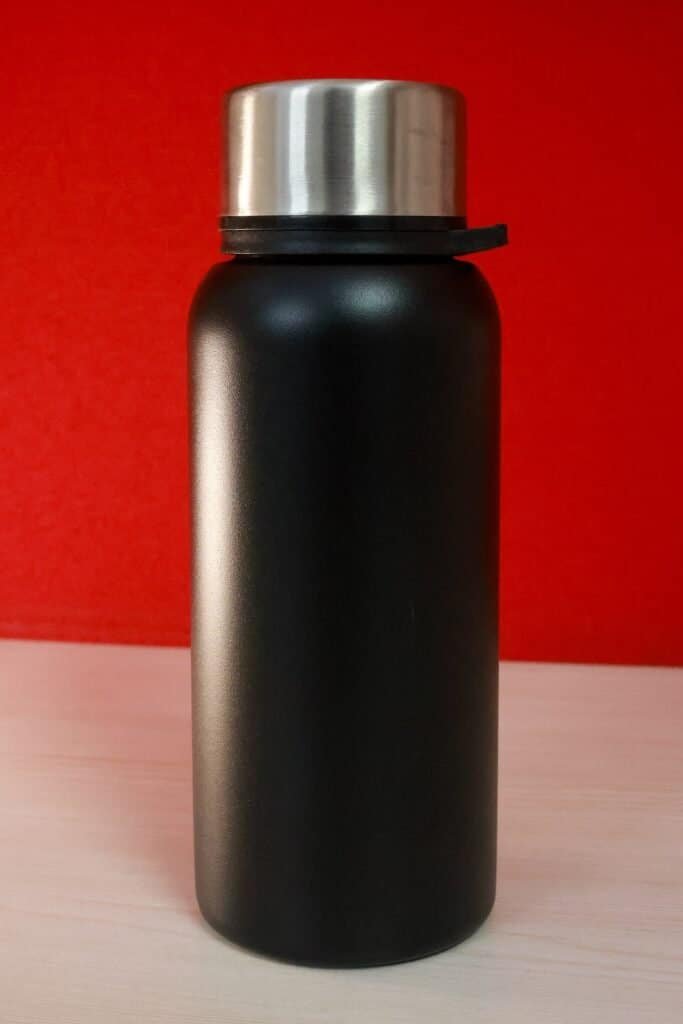
A thin AI-generated product page usually fails Google’s helpful content self-assessment on three or four specific questions, not on some vague sense of “feeling AI-written.” This walkthrough takes one generic example page, runs it against Google’s own published questions, and rewrites it line by line so each failure has a concrete fix attached, rather than just adding more words.
The before: a page that reads fine and still fails
Here is a realistic example of a thin product page for a mid-range insulated water bottle, the kind a store might generate in bulk across hundreds of SKUs:
The Aurora 32oz Insulated Water Bottle keeps your drinks cold for hours and hot drinks warm, thanks to double-wall vacuum insulation. Built to last, it’s made from durable stainless steel that resists dents and rust. The leak-proof lid makes it perfect for the gym, office, or outdoor adventures. Available in a variety of colors to match your style.
Example before copy
Nothing in that paragraph is false, and it is not obviously low-effort at a glance. It is also the same four sentences that could describe almost any insulated bottle on the market, with the product name swapped in. That is the specific failure mode Google’s own guidance is written to catch.
Running it against Google’s self-assessment questions
Google publishes a list of self-assessment questions for creators under its “creating helpful, reliable, people-first content” guidance. Three of them land directly on this paragraph.
“Does the content provide original information, reporting, research, or analysis?” The before version does not. Capacity, insulation claims, and lid type are restated, not demonstrated with anything a competitor’s page could not also claim.
“Does the content provide a substantial, complete, or comprehensive description of the topic?” No. A buyer comparing bottles wants to know how long it actually keeps ice, how it performs with carbonated drinks, whether the mouth fits a standard ice cube, and how the paint holds up to a dishwasher. None of that is here.
“Is the content mass-produced by or outsourced to a large number of creators, or spread across a large network of sites, such that individual pages or sites don’t seem to get as much attention or care?” This is the one that matters most at scale. A single thin page is a quality problem. Three hundred near-identical thin pages generated the same way, across a store’s whole catalog, is the pattern Google’s guidance and its separate scaled content abuse policy are both written to flag, regardless of whether a person or a model typed the words.
The rewrite, with each change tied to a specific failure
The Aurora 32oz Insulated Water Bottle held ice water at 39–44°F over an 8-hour test at room temperature (72°F), lid closed, with no additional ice added after the initial fill. The double-wall vacuum gap is 6mm, measured at the widest point of the body. The mouth has an inner diameter of 1.75 inches, wide enough for standard ice cube trays but not for the larger cube molds some premium coolers use. The 18/8 stainless steel body showed no visible pitting after 40 dishwasher cycles in our durability test, though the brand still recommends hand-washing the lid, which has a silicone gasket that degrades faster under sustained heat.
Example after copy
This copy was drafted with AI assistance from our in-house testing data and reviewed by our product testing lead before publishing.
Three things changed, and each one answers a specific question from the list above rather than just lengthening the page.
The capacity and insulation claims became falsifiable test results instead of restated spec-sheet language: a stated test duration, a stated start and end temperature, and the conditions of the test (room temperature, lid closed, no ice added). That is the “original information” a competitor’s page cannot copy-paste, because it describes a test this specific product was put through, not a category-wide claim.
The mouth-diameter number was added because it answers a real comparison question a buyer has that the before version skipped entirely: can I fit standard ice cubes in it. A single added number did more for comprehensiveness than three added adjectives would have.
The closing line discloses that the copy was drafted with AI assistance from the brand’s own test data and reviewed by a named staff member before publishing. Google’s guidance is explicit that automated or AI-assisted content is not disqualifying on its own, but it recommends disclosing automation “where readers would reasonably expect to know about it,” and explaining why it was used. A one-line disclosure plus a named reviewer converts an anonymous page into one with a visible point of accountability, which is also what the “who, how, and why” section of Google’s guidance is asking for.
Before and after, side by side
| Original claim | Revised claim | Self-assessment question it answers |
|---|---|---|
| “Keeps drinks cold for hours” | Held 39–44°F over an 8-hour room-temperature test, lid closed | Original information / verifiable claim |
| “Built to last” | No visible pitting after 40 dishwasher cycles | Easily-verified factual accuracy |
| No mouth diameter given | 1.75-inch mouth diameter, fits standard ice trays | Comprehensive description |
| No disclosure | AI-assisted draft from test data, reviewed by a named staff member | Who, how, and why the content was made |
What did not change, and why that matters
The rewrite did not add a three-question FAQ block, a “key takeaways” bullet list, or a fourth paragraph of generic buying advice. None of those were missing from the original for a structural reason; they would have added length without adding anything a competing page does not already say. Google’s own question is not “is the content long enough,” it is whether the content provides “substantial value when compared to other pages in search results.” A single verified test result and one real spec a shopper actually compares across brands did more for that than padding would have.
This is also the version of the fix that scales honestly. A catalog of five hundred SKUs cannot each get a bespoke paragraph of prose, but it can have five hundred genuine, product-specific test results if the testing itself happens at that scale. The fix is doing the measurement once per product and writing it down, not writing more words per product.
A fourth question the before version also fails
Google’s guidance includes a separate expertise-focused question worth checking on its own: “does the content have any easily-verified factual errors?” The before paragraph does not contain an outright error, but it makes a durability claim, “built to last,” that nobody checked. That phrase is common in product copy precisely because it is unfalsifiable; it cannot be verified, so it also cannot be trusted the way a stated number can. The after version replaces it with a testable claim instead, because a page that makes zero unverifiable claims cannot fail this question, while a page that makes even one invites a rater, or a reader, to go looking for the rest.
A short checklist for the next hundred pages
Rewriting one page by hand does not solve a catalog-wide problem, but the diagnosis does generalize into a short checklist that scales:
- Replace at least one adjective-only claim with a number from an actual test or spec sheet.
- Add one comparison detail a buyer would need to decide between two similar products, not three.
- Remove any claim that cannot be verified (such as “built to last”) unless it is replaced with a testable one.
- Add a one-line disclosure of how the copy was produced and who reviewed it, if automation was involved.
- Re-run the self-assessment questions above before publishing, not after a ranking drop or a complaint.
Running every SKU page through those checks before publishing is slower than generating a paragraph per product and moving on, but it is also the difference between a catalog that reads as five hundred individually reviewed pages and one that reads, to both a human skimmer and to Google’s raters, as the same four sentences five hundred times with the nouns swapped.
Why disclosure is not the part people expect to need
Most teams fixing a thin-content problem focus on the substance: better data, more specific claims, real test results. Disclosure of how the content was produced tends to get skipped, partly because it feels like admitting a weakness. Google’s own framing treats it the opposite way: a page that explains what automation did and who reviewed the output is giving a reader, and a quality rater, the exact information needed to trust it. An unexplained page leaves that question open, and an open question on a trust signal is a worse outcome than a disclosed one, even when the underlying content is identical.
What this does not fix
None of this rewrite addresses technical issues like duplicate title tags across similar SKUs, missing structured data, or thin category pages one level up from the product page. A before-and-after like this one is about the page’s actual words and claims, not its markup or its place in the site’s architecture. Those are real problems worth checking separately, and fixing the content without also checking the technical layer underneath it tends to understate how much work a full catalog cleanup actually takes.
Where this fits with a broader content audit
A single page rewrite like this one is a spot check. Finding every page on a site with the same pattern, and deciding which ones are worth the testing effort versus which should be merged or removed, is the job of a full content audit rather than a page-by-page rewrite. It is also worth running a site-wide check against Google’s scaled content abuse policy directly, since the volume and uniformity of a catalog, not any single page, is usually what triggers that specific flag. And because E-E-A-T sits underneath several of the self-assessment questions used here, it is worth treating the “who reviewed this” line as a standing part of the template, not a one-off addition to this particular page. The underlying claims about what a page is “about” also tie back to how search engines match content to intent in the first place, which is a useful frame for deciding which comparison details are worth adding to a given product category.
Photo: Gannu03 / Wikimedia Commons, CC BY-SA 4.0.

