
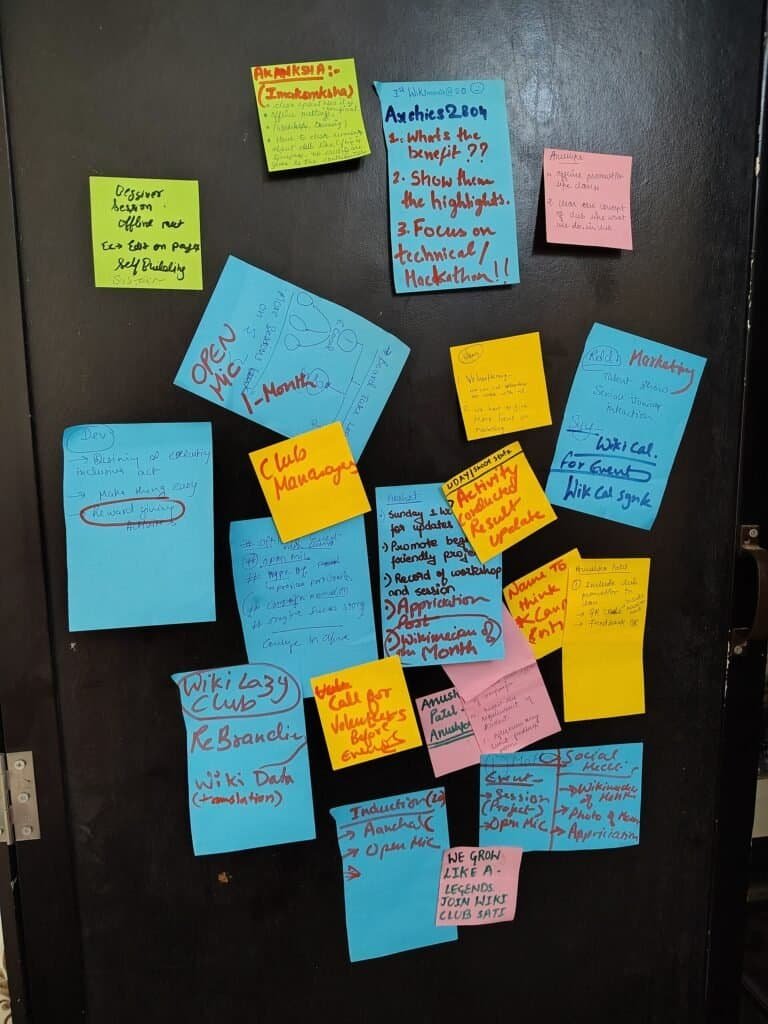
Keyword clustering is the process of grouping search terms that share the same underlying search intent so you can target them with a single, comprehensive page instead of writing a separate thin article for every keyword variation. Done by hand, it means staring at a spreadsheet of hundreds of keywords and guessing which ones a searcher would actually accept the same answer for. Done with a well-built AI prompt, the model does the pattern-matching for you — as long as you tell it explicitly what “same intent” should mean for your site.
Why Cluster Keywords Instead of Writing One Page Per Keyword?
Search engines increasingly reward pages that answer a topic thoroughly over pages that target one exact phrase, and search marketers have converged on topic clusters — a pillar page supported by related subtopic pages — as the standard way to structure that coverage. Writing a separate page for “AI prompt examples,” “examples of AI prompts,” and “sample AI prompts” doesn’t just waste writing effort, it also creates internal competition where your own pages compete against each other for the same searches. Clustering those into one page targeting the shared intent, with the others treated as keyword variations to work into that page’s headings and body copy, avoids that self-competition entirely.
What Should You Give the Model Before Asking It to Cluster Keywords?
A raw keyword list and the instruction “cluster these” will get you a cluster, but not necessarily a good one. A stronger prompt supplies:
- The full keyword list, ideally with search volume and any ranking data you already have, pasted directly into the prompt rather than described.
- Your site’s existing category or content structure, so the model clusters toward pages you can actually build or already have, not an abstract taxonomy.
- An explicit definition of what counts as “same intent” for your case — informational vs. commercial intent is the most common split, and the model needs to know which one to prioritize when a keyword could go either way.
- The output format you want: a table with cluster name, primary keyword, and supporting keywords is far easier to act on than a paragraph description.
How Do You Get the Model to Explain Its Clustering Decisions?
Ask for the reasoning, not just the groups. A prompt like “for each cluster, state in one sentence why these keywords share the same search intent” forces the model to justify groupings instead of clustering on surface-level word overlap. This step catches a common failure mode: keywords that share several words but actually reflect different intents — “how to write a resume” and “resume writing service,” for example, look similar but one is informational and one is commercial, and they shouldn’t be clustered under the same page even though they share most of their words.
How Do You Turn a Finished Cluster Into a Content Plan?
Once you have clusters, ask the model to go one level further: for each cluster, identify whether an existing page on your site already covers that intent, or whether it needs a new page, and to suggest which existing pages should link to the new or updated one. This turns a keyword-clustering exercise directly into an editorial and internal-linking task list, rather than leaving you with a tidy spreadsheet and no next step.
Frequently Asked Questions
How many keywords should go into a single cluster?
There’s no fixed number — it depends entirely on how many distinct ways people search for the same underlying intent. A narrow topic might cluster five keywords; a broad one might cluster fifty. The test isn’t the count, it’s whether a single well-written page could genuinely satisfy every keyword in the group without stretching to cover unrelated intents.
Can AI clustering replace a dedicated keyword research tool?
Not entirely. Search volume, competition, and ranking data still need to come from a keyword research tool or search console data — the model isn’t pulling live search metrics unless you feed them in. What AI prompting replaces is the manual, subjective work of deciding which keywords in that data belong together, which is normally the most time-consuming part of the process.
Should branded and non-branded keywords be clustered together?
Generally no. Branded searches (someone searching your product or company name) reflect a different intent than non-branded, generic searches, even when the topic overlaps. Telling the model explicitly to separate branded from non-branded terms before clustering avoids ending up with a cluster that mixes someone already familiar with your brand with someone discovering the topic for the first time.
For a deeper look at how topic clusters fit into overall SEO structure, see Search Engine Land’s guide to topic clusters and pillar pages. Photo: Dev Jadiya, Wikimedia Commons, CC BY 4.0. Once your clusters are mapped, connecting them is the next step — see our guide on AI prompts for internal linking, and for turning a cluster into an actual writing plan, our guide to AI prompts for SEO content briefs.