
The Model Context Protocol (MCP) is an open standard, introduced by Anthropic in late 2024, that defines a common way for AI assistants to connect to external data sources and tools — like files, databases, and business apps — instead of every developer building a one-off integration for each combination of AI model and tool. Before a shared standard like this existed, connecting an AI assistant to, say, your company’s ticketing system and your calendar meant writing separate, custom integration code for each one, and redoing that work again for every different AI application you wanted to connect them to. MCP replaces that with a single protocol both sides can implement once.
How Does MCP Actually Work?
MCP uses a client-server model. An “MCP server” is a small program that exposes a specific tool or data source — a filesystem, a Slack workspace, a database, a project-management tool — through the protocol’s standard format. An “MCP client,” built into an AI application, connects to one or more of these servers and can then ask what capabilities each one offers and call them. According to Anthropic’s own announcement, the goal is to work like a universal connector: build one MCP server for a piece of software, and it becomes usable by any MCP-compatible AI assistant, rather than needing a custom connector per assistant.
Under the hood, an MCP server can expose three kinds of things: resources (data the AI can read, like a file or a database record), tools (actions the AI can invoke, like sending a message or running a query), and prompts (reusable prompt templates the server provides for common tasks). The AI assistant discovers what’s available dynamically when it connects, rather than having that list hard-coded into the application.
How Is MCP Different From Regular Function Calling?
Function calling (or tool use) is the mechanism a model uses to request that a specific action be taken — it’s the model’s side of the conversation. MCP is a layer underneath that: a standardized way to package and expose the tools, resources, and prompts a model can call, so that the same integration works across different AI applications without rewriting it for each one. You could think of function calling as the verb and MCP as the shared vocabulary and connector format that makes a given tool callable in the first place, regardless of which AI application is doing the calling.
Why Does a Standard Protocol for This Matter?
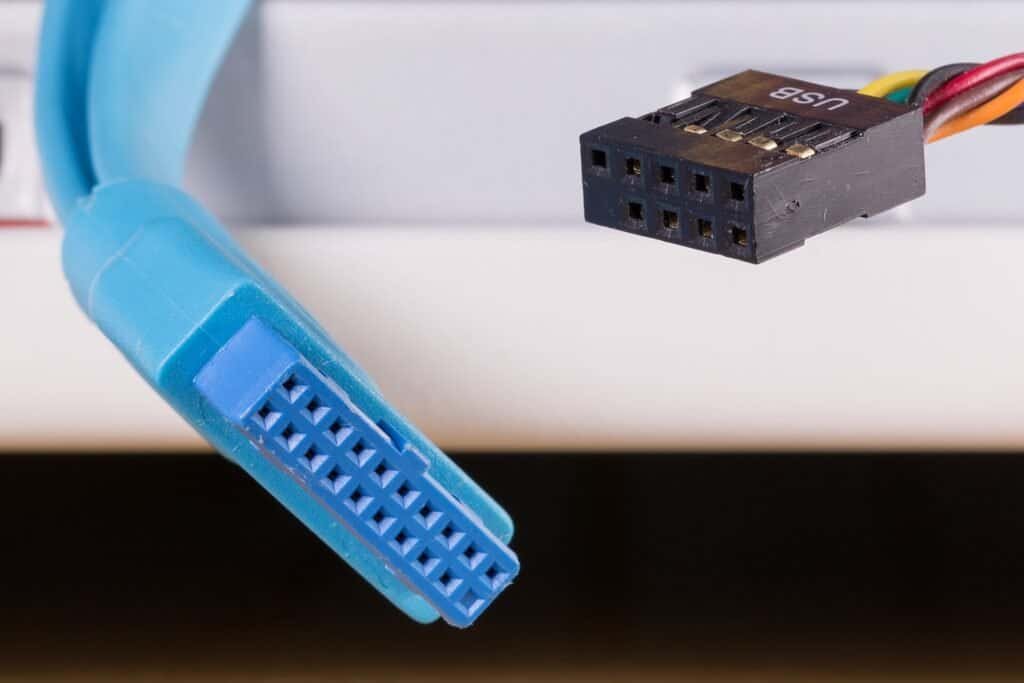
Without a shared standard, connecting AI to real business systems doesn’t scale. Every new tool needs its own integration, for every AI application that wants to use it — a combinatorial problem that gets worse as both the number of tools and the number of AI applications grow. A shared protocol turns that into a linear problem: a tool maker builds one MCP server, and any compliant AI application can use it; an AI application supports the MCP client side once, and it can use any existing MCP server. That’s the same logic behind standards like USB or HTTP — the value isn’t in the protocol itself, it’s in everyone building to the same one.
What Can You Actually Connect Using MCP Today?
Since its release, an open ecosystem of MCP servers has grown around common developer and business tools — version control systems, project trackers, databases, cloud storage, communication platforms, and more — maintained both by the tool vendors themselves and by the open-source community. Because the protocol is open, anyone can write a server for an internal or niche tool that has no official integration yet, which is part of why adoption has moved fairly quickly since the protocol’s introduction.
Frequently Asked Questions
Is MCP specific to one AI model or company?
No. Anthropic created and open-sourced MCP, but the protocol itself isn’t tied to any single model provider. Because it’s an open specification, other AI applications and model providers can implement support for it, which is the point of standardizing it rather than keeping it proprietary.
Do I need to be a developer to use MCP?
To build a new MCP server for a tool that doesn’t have one yet, yes — that involves writing code against the protocol’s specification. To use an MCP server that already exists for a tool you rely on, generally no: most AI applications that support MCP let you connect an existing server through their settings without writing anything yourself.
Does connecting an MCP server give the AI unrestricted access to that tool?
No — access is scoped to whatever resources and tools that specific server exposes and whatever permissions it was configured with, and well-built AI applications also add their own approval steps for sensitive actions. MCP defines how a connection and a request are structured; it doesn’t override the access controls and permissions of the underlying system being connected to.
For the original announcement and full technical specification, see Anthropic’s introduction of the Model Context Protocol and the official MCP documentation. Photo: Tobias “ToMar” Maier, Wikimedia Commons, CC BY-SA 3.0. MCP is closely related to how models request actions in the first place — see our guide on function calling and tool use, and for how models pull in outside knowledge more generally, see what Retrieval-Augmented Generation (RAG) actually is.